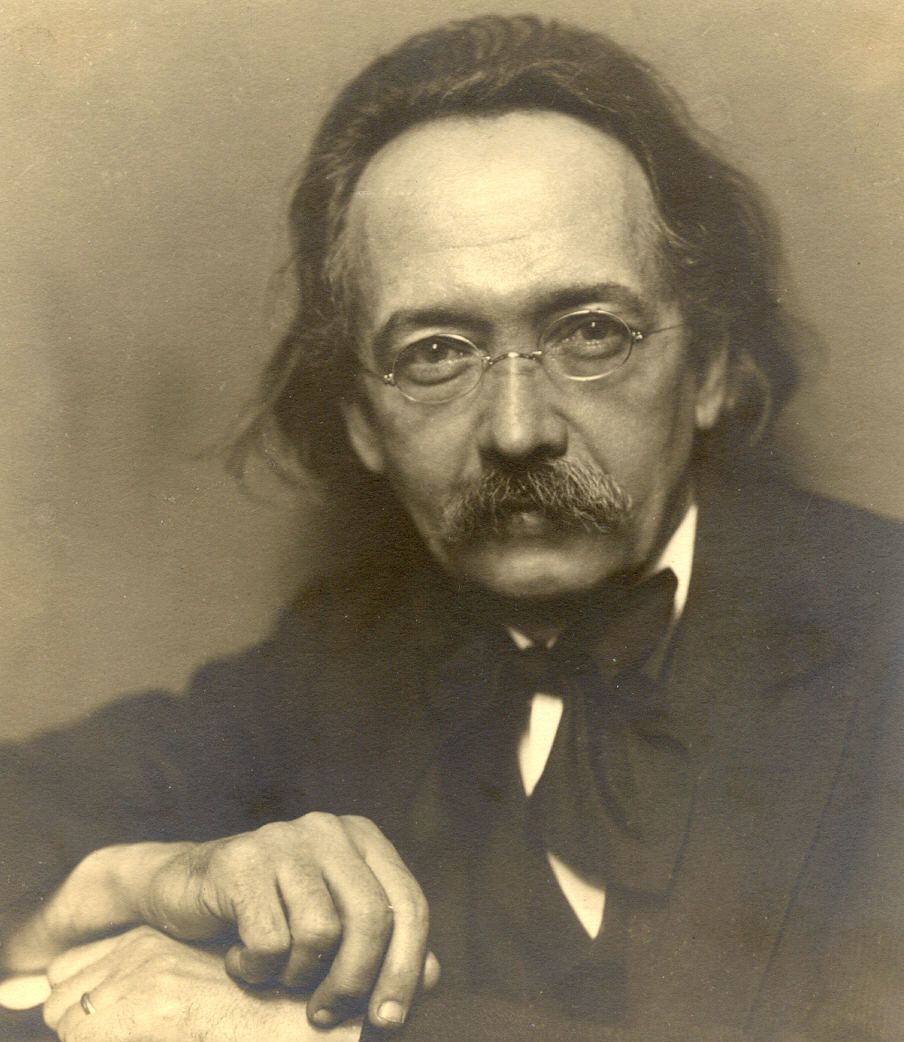
ALEXANDER BOROVSKY (BOROWSKY) (MITAU, RUSSIA, 18 MARCH,
1889 – WABAN, MASSACHUSETTS, USA, 27 APRIL, 1968)
Alexander Borovsky (Borowsky),
a Russian-American pianist, was born in Mitau, Russia. His first piano teacher
was his mother, a pupil of Vasily Safonov, the great Russian pianist. He
completed his studies at the St. Petersburg Conservatory in 1912 with a gold
medal and the Anton Rubinstein Prize. He created great attention in the 1912
Anton Rubinstein competition which he won. He received a degree in law from St.
Peterburg University alongside his music studies. Alexander Borovsky taught
master-classes at the Moscow Conservatory from 1915 to 1920. The May 11, 1916
Musical Courier writes from Moscow newspaper of March 1915, “Alexander Borowski
is a pupil of Anna Essipova. He is a pianist of great skill, power and alluring
charm, with strong rhythm and well modulated dynamics. Mr. Borowski respects
the composer’s design and has the gift of bringing the spirit of it.
Scriabine’s Tenth Sonata (the last composed), a most difficult work of account
of its complexity and theosophical spirit, was performed by Borowski at his recital
with rarely deep analysis, glowing with fire progressively in a climax.”
“Occasionally, in the midst of
scores of concerts, most of which are only of mediocre quality, we are reminded
of the adage that while, “many are called, few are chosen.” “One of the chosen,
musically speaking of course, is the Russian pianist, Alexander Borowsky, who
is certainly a rising star in the tonal heavens. One must hear him play Bach in
order to admire his precision, clear articulation, dynamics and colorful
shading. But not only does he excel in the classics, but he seems also to be a
born interpreter of modern music, especially of the young Russian school. His success
here was a genuine one.”
After winning fame here as a
pianist of widely diversified programs, Borovsky returned to Europe where, in
1937, he first devoted himself almost exclusively to presenting the works of
Johann Sebastian Bach. At the outbreak of the war, Mr. Borovsky first went to
South America, where he continued his Bach cycles—the first such recitals ever
to be presented in many of the Latin-American capitals—and where he earned
fresh laurels. He gave live Bach evenings in Buenos Aires, with marked acclaim,
and, as a result, was invited to repeat his performances under the auspices of
the Cutura Artistica of São Paulo, in Brazil. Mr. Borovsky now brings his Bach
programs to the United States.
Decided to leave Russia after
the October Revolution he started touring in Europe and eventually made his
American debut in Carnegie Hall in 1923. He became a US national in 1941 and a
professor at the Boston University in 1956. He was a soloist with all the major
orchestras in Europe and North and South America, appearing as soloist in more
than 30 concerts with the Boston Symphony Orchestra under the late Serge
Koussevitzky. At the same time he began to record some of the significant works
of Bach and Liszt and he was the first artist to record Bach’s 30 Inventions
and all of Liszt’s Hungarian Rhapsodies. Mr. Borovsky’s work was distinguished
by his objective interpretation of classical and romantic music. His playing of
Bach, critics said, was notable for its architectural quality. Mme. Scriabin’s
writes in Musical Courier, October 18, 1917, page 27 “I also propose the name
of Alexandre Borowsky, a young professor of the Conservatory of Moscow, who
plays almost all the works of Scriabine, and who has already acquired a great
reputation as a pianist in Russia. Mr. Borowsky is a member of the Scriabine
Society.” “Addresses on various aspects of Scriabin’s art have been given by
MM. Braudo, Makovsky, and Bryanchanimov, and the performance of the later works
and also of some posthumous pieces has been in the hands of Borovsky’s
pianoforte music. Borovsky’s position is the more honourable since no Russian
recital programme is complete without Scriabin’s name, and this artist has
therefore no rivals.”
In 1923 Borowski writes in
“Modern Masters of the Keyboard,” by Harriette Brower, “Yes I have a very large
repertoire and am constantly adding to it. While I was in South America I gave
many concerts in various cities. In Buenos Aires I gave twelve entirely
different programs in ten weeks. I play much Russian music, of
course–Scriabine, Prokofieff and many others. But I play the music of all
countries and all epochs. American music and MacDowell. Very little American
music is known in Russia, I think. As for MacDowell, of course we know him by
name, and a few of the more brilliant numbers, such as the Hexen Tanz,
Polonaise and Concerto for piano, but not the Sonatas. I should like to do one
or more of these, and also some works by other American composers. Now that I
have been in America, the musical growth of your country interests me
immensely. I have had a happy two months here, and I hope to return for a
longer stay. But now, after our two happy months, Madame and I are on the point
of returning to Europe, as I have a tour of forty concerts on the other side,
which will take me to London, Paris, Spain, Italy, Belgium, Holland and
Germany. But all the time I shall look forward to my return to your beautiful
country–America!”
TRACKLIST
DUO-ART 6704 Impromptu a la
Mazurka, Op. 10, No. 2
WELTE-MIGNON 2030 5 Morceaux
de fantaisie Op. 3, No. 1 Elegie es-Moll.
WELTE-MIGNON 2033 Prélude No.
4 d-Moll Op. 23, 3.
WELTE-MIGNON 20305 Morceaux de
fantaisie Op. 3, No. 1 Elegie es-Moll.


.jpg)