Sunday, July 6, 2025

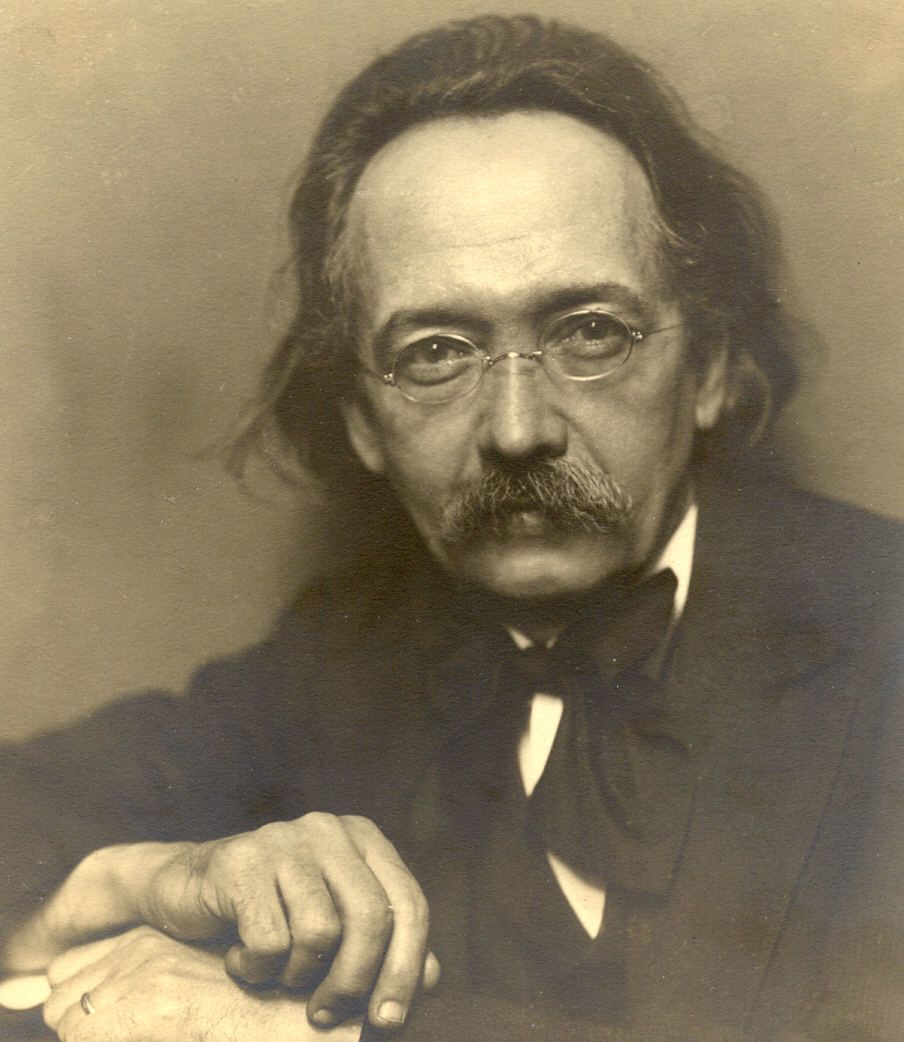
THEODOR LESCHETIZKY THE COMPLETE WELTE-MIGNON PIANO ROLLS CDR


THEODOR LESCHETIZKY, ORIGINAL NAME TEODOR LESZETYCKI (JUNE 22, 1830, ŁAŃCUT, POLAND, AUSTRIAN EMPIRE [NOW IN POLAND] — NOVEMBER 14, 1915, DRESDEN, GERMANY)


Polish pianist and teacher who, with Franz Liszt, was the most influential teacher of piano of his time. Leschetizky studied under Carl Czerny in Vienna and thus was linked indirectly with the playing of Czerny’s teacher, Ludwig van Beethoven. In 1852 he went to St. Petersburg as a pianist and teacher. From 1878 he taught in Vienna. As one of the great pianists of the Romantic era, he approached the printed note with a certain amount of freedom. As a teacher, he stressed thorough understanding of the music, absolutely sound technique, and, above all, beauty of tone. Although the celebrated “Leschetizky method” of teaching was much discussed, he himself claimed to have no fixed method, and his students affirmed that he developed the individual characteristics of each student. His pupils included many of the leading pianists of the 19th and early 20th centuries, among them Artur Schnabel, Ossip Gabrilowitsch, and Ignacy Paderewski.


TRACKLIST


1. 1192 WELTE-MIGNON MOZART - Fantasia, K. 396, c

2. 1193 WELTE-MIGNON HELLER - Preludes, Op. 81, No. 3, G; No. 10, c#

3. 1194 WELTE-MIGNON CHOPIN - Nocturne, Op. 27, No. 2, Db

4. 1195 WELTE-MIGNON CHOPIN - Polonaise, Op. 71, No. 2, Bb (Posthumous)

5. 1196 WELTE-MIGNON LESCHETIZKY - Barcarolle, Op. 39, No. 1, a

6. 1197 WELTE-MIGNON LESCHETIZKY - La source (The Spring) Etude, Op. 36, No. 4, A

7. 1198 WELTE-MIGNON LESCHETIZKY - Arabesque, en forme d’étude, Op. 45, No. 1, Ab

8. 1199 WELTE-MIGNON LESCHETIZKY - L’Aveu (The Secret) Op. 31, No. 1, Ab

9. 1200 WELTE-MIGNON LESCHETIZKY - Wellen und Wogen (Waves and Billows) Op. 40, #1,e

10. 1201 WELTE-MIGNON LESCHETIZKY - Mazurka, Op. 24, No. 2, Eb

11. 1202 WELTE-MIGNON LESCHETIZKY - Canzonetta Toscana, Op. 39, No. 3, f

12. 1203 WELTE-MIGNON LESCHETIZKY - Les deux alouettes (Two Larks) Op. 2, No. 1, Ab


THEODOR LESCHETIZKY THE COMPLETE WELTE-MIGNON PIANO ROLLS CDR

JOSEF PEMBAUR WELTE-MIGNON PIANO ROLLS CDR


JOSEF PEMBAUR (INNSBRUCK, 20 APRIL, 1875 – MUNICH, 12 OCTOBER, 1950)


Born in Innsbruck, Pembaur was the son of the composer and music director Josef Pembaur the Elder (1848–1923). He got his first musical education by his father. From 1893 until 1896, he studied piano at the Hochschule für Musik und Theater München with Ludwig Thuille, conducting with Ludwig Abel and composition and organ with Josef Gabriel Rheinberger. He was awarded a gold medal at the final examination in 1896. From 1896 to 1901, he worked as a piano teacher at the same school. In 1901/02, he continued his studies with Alfred Reisenauer at the University of Music and Theatre Leipzig, where he was employed as a teacher for higher piano playing. In 1912, he was appointed professor of music in Saxony. In 1921, he was appointed professor in Bavaria, but he returned to the Academy of Music in Munich and taught a master class for piano. His students included Anna Renfer. Pembaur also completed numerous concert tours. In Berlin he was one of the judges in the competition for the Ibach Prize. In Spring 1919, Pembaur took eight piano pieces for the Reproduktionsklavier Welte-Mignon, including two compositions by his father, probably his earliest recordings. On 29 October 1918, Thomas Mann heard him in an event with Joachim von Delbrück, who was reading from his novel Der sterbende Chopin that evening. In 1906, he married the pianist Maria Elterich, and the two of them also performed together on two pianos. Pembaur's brother Karl was a composer and choirmaster in Dresden. Pembaur died in Munich at the age of 75.


TRACKLIST


1. 3264 WELTE-MIGNON BRAHMS - Ballade, Op. 10, No. 1, d

2. 3265 WELTE-MIGNON BRAHMS - Ballade, Op. 10, No. 2, D

3. 3266 WELTE-MIGNON BRAHMS - Ballade, Op. 10, No. 3, b

4. 3267 WELTE-MIGNON BRAHMS - Ballade, Op. 10, No. 4, B


JOSEF PEMBAUR WELTE-MIGNON PIANO ROLLS CDR

Saturday, July 5, 2025

HUBERT FLOHR WELTE-MIGNON PIANO ROLLS CDR


HUBERT FLOHR (KOBLENZ, JULY 8, 1869 - DÜSSELDORF, JULY 13, 1940)


Flohr, whose musical talent was already evident in his early childhood, received his first lessons from his father, the high school music teacher Joseph Flohr. Lessons continued in Bonn with Johann Walbrül, a Spohr student who had settled in Bonn. Already at the age of 9 Flohr appeared as a pianist under Julius Langenbach on December 30, 1878 in Bonn's Beethoven Hall with Mozart's Piano Concerto in D minor K. 466. The child prodigy had such a success with this concert that just a month later he performed Beethoven's Piano Concerto in C major again in the Beethoven Hall under Langenbach, further concerts in the Rhineland followed. Also in 1879 the first concert tour to Belgium and the Netherlands was undertaken. At one concert, Liszt's pupil Juliusz Zarębski heard Flohr playing and offered Flohr his place in his artistic class at the Royal Conservatory in Brussels. After Zarębski's death in 1885, Hubert Flohr continued his studies at the Royal Conservatory in Liège with Étienne Ledent and at the Cologne Conservatory with Isidor Seiß. The last training took place with Clara Schumann in Frankfurt. Already an orphan at the age of 16, Flohr then moved to Munich, from where he undertook numerous concert tours through Germany, Switzerland and Austria-Hungary. As a song accompanist he performed with Pauline Lucca, Amalie Joachim, the violinist August Wilhelmj and the cellist Joseph Diem. In 1892 Flohr settled in Neuss, in 1902 he went to Düsseldorf, where he worked as a teacher at the Buths-Neizel Conservatory and as the municipal music director for over 25 years, and also became a member of the Malkasten artists' association. He died of lung cancer in 1940. His 50th anniversary as an artist in 1928 was celebrated with a festive event in Düsseldorf. In 1959 his 90th and in 1969 his 100th birthday were commemorated in Düsseldorf. Flohr's compositions were destroyed by an air mine in 1942.


TRACKLIST


1. 3348 WELTE-MIGNON BRAHMS - Scherzo, Op. 4, eb

2. 3351 WELTE-MIGNON MENDELSSOHN - Overture to “A Midsummer Night’s Dream” Op. 17

3. 3352 WELTE-MIGNON WEBER - Overture to the Opera “Preciosa”

4. 3356 WELTE-MIGNON SIBELIUS -”Finlandia”, Op. 26, No. 7

5. 3357 WELTE-MIGNON RAFF - Cachoucha, Caprice, Op. 79, c

6. 3359 WELTE-MIGNON FLOHR - Lenz, Lied Op. 19, 5


HUBERT FLOHR WELTE-MIGNON PIANO ROLLS CDR

FANNY DAVIES WELTE-MIGNON PIANO ROLLS CDR


FANNY DAVIES (GUERNSEY, BAILIWICK OF GUERNSEY, UNITED KINGDOM, 27 JUNE 1861 - LONDON, ENGLAND, 1 SEPTEMBER 1934)


One of the most celebrated of English pianists, Fanny Davies studied first with Karl Reinecke and Oscar Paul. From 1883 through 1885, she was tutored by Clara Schumann and is now considered to have been one of Schumann's most gifted and distinguished pupils. During the 1888 season, George Bernard Shaw attended a performance by Davies' which led him to remark that her playing was "full of speed, lilt, life, and energy. She scampered through a fugue of Bach's with a cleverness and jollity that forced us to condone her utter irreverence." The Beethoven Fourth Concerto was one of her specialties, and her Schumann playing was highly respected, particularly because it derived directly from the great tradition of Clara Schumann herself. Davies championed the classical works of Beethoven and Chopin as well as what were then new compositions by Brahms and British composers. In 1887, she and Adolf Brodsky gave the first performance of Ethel Smyth 's violin sonata in Leipzig. In the late 1920s, she made one of the first electrical recordings of Robert Schumann's concerto. She also played the then almost unknown Elizabethan composers. Davies excelled as a recital accompanist and also collaborated with world-class virtuosos like Pablo Casals. In 1921, she was the first musician to give a piano recital in Westminster Abbey; she also gave many recitals in the church of St. Martin-in-the-Fields and is believed to be the first woman to play piano in a church. Sir Edward Elgar dedicated his Concert Allegro Op. 46 to her. One of her students was Kathleen Dale.


TRACKLIST


1772 WELTE-MIGNON SCHUMANN -”Kinderscenen” (Childhood Scenes) Op. 15, Nos. 1-6

1773 WELTE-MIGNON BRAHMS - Intermezzo, Op. 116, No. 4, Eb

1773 WELTE-MIGNON SCHUMANN -”Kinderscenen” (Childhood Scenes) Op. 15, Nos. 7-13

1774 WELTE-MIGNON BRAHMS - Intermezzo, Op. 119, No. 2, e

1777 WELTE-MIGNON GHEYN Prelude, Coucou (Carillon)


FANNY DAVIES WELTE-MIGNON PIANO ROLLS CDR

FANNIE BLOOMFIELD ZEISLER WELTE-MIGNON PIANO ROLLS 2 CDR


FANNIE BLOOMFIELD ZEISLER (JULY 16, 1863, BIELSKO, POLAND – AUGUST 20, 1927, CHICAGO, ILLINOIS, UNITED STATES)


Zeisler was born Fannie Blumenfeld on July 16, 1863, in Bielitz, Austrian Silesia to Jewish parents. She emigrated to the United States with her family at the age of 4 in 1867. The family settled in Chicago, Illinois where they later changed their name to Bloomfield. She was the sister of Maurice Bloomfield and the aunt of Leonard Bloomfield. At the age of six, before receiving any musical instruction, she began picking out tunes on the piano. Her first teachers were in Chicago; Bernard Ziehn and Carl Wolfsohn. In 1877, Annette Essipova, then on tour in the United States, heard her play and advised that she became a pupil of Theodor Leschetizky. She made her debut at the age of 11 in February 1875. In 1878, she returned to Austria to study in Vienna, under Leschetizky. While in Austria, she changed her name from Blumenfeld to Bloomfield. She returned to Chicago in 1883. Bloomfield performed in concert in Chicago in April 1884. In January 1885, she debuted in New York City. Around the turn of the century, she made piano rolls of various piano compositions, Chopin's Waltz No. 11 in G minor being among them. Bloomfeld married the attorney Sigmund Zeisler in 1885 and had three sons: Leonard, Paul and Ernest. In 1888, she returned to Vienna to study with Leschetizky. She also began to tour in Europe and the United States, with the Chicago Symphony Orchestra. Her last performance was in February 1925 in Chicago. She played the Beethoven Andante Favori and concertos by Chopin and Schumann. Zeisler died in Chicago, Illinois on August 20, 1927.


TRACKLIST


1. WELTE-MIGNON 2597 Croquis et silhouettes Op. 87, No. 4 (Schütt)

2. WELTE-MIGNON 1461 Dance of the blessed spirits from Orfeo (Gluck-Sgambati) Welte-Mignon

3. WELTE-MIGNON 1469 Gondoliera Op.41 (Moszkowski) Welte-Mignon

4. WELTE-MIGNON 6963 Juggleress Op.52 No.4 (Moszkowski) Welte-Mignon

5. WELTE-MIGNON 6979 Love-Waltz Op.57 No. 5 (Moszkowski) Welte-Mignon

6. WELTE-MIGNON 6960 Nocturne C Minor Op. 48 No 1 (Chopin) Welte-Mignon

7. WELTE-MIGNON 6978 Nocturne in C Sharp Minor Op.27 No.1 (Chopin) Welte-Mignon

8. WELTE-MIGNON 7002 Nocturne In D Flat Major Op.27 No.2 (Chopin) Welte-Mignon

9. WELTE-MIGNON Piano Sonata No.2 Op.35 In B Flat Minor- 1st Movement - Grave... Doppio Movim 2586

10. WELTE-MIGNON Piano Sonata No.2 Op.35 In B Flat Minor- 2nd Movement - Scherzo Welte-Mignon 2587

11. WELTE-MIGNON Piano Sonata No.2 Op.35 In B Flat Minor- 3rd Movement - Lento; Marche Funebr 2588

12. WELTE-MIGNON 2589 Piano Sonata No.2 Op.35 In B Flat Minor- 4th Movement Welte-Mignon

13. WELTE-MIGNON 1464 Scherzo in B Flat Minor Op.31 (Chopin) Welte-Mignon

14. WELTE-MIGNON 6961 Serenade Op. 28. (Brockway) Welte-Mignon

15. WELTE-MIGNON 2593 Toccata & Fugue in D Minor (Bach-Tausig) 


FANNIE BLOOMFIELD ZEISLER WELTE-MIGNON PIANO ROLLS 2 CDR

Thursday, July 3, 2025

CORNELIUS RÜBNER WELTE-MIGNON PIANO ROLLS CDR


PETER MARTIN CORNELIUS RÜBNER, ALSO RYBNER, AMERICAN RUBNER (COPENHAGEN, OCTOBER 26, 1853 – NEW YORK CITY, JANUARY 21, 1929)


Rübner studied from January 1869 to December 1871 at the Royal Conservatory in Copenhagen with Niels Wilhelm Gade and Johan Christian Gebauer (1808-1884). In 1880 he became Felix Mottl's assistant at the Grand Ducal Baden court orchestra in Karlsruhe, and from around 1884 to 1886 he also worked as the Grand Ducal Baden court pianist in Baden-Baden. In 1892 he became director of the Philharmonic Society and teacher at the Grand Ducal Conservatory in Karlsruhe. In the empire he gained fame , among other things, because he set the poem Our Emperor by the poet Otto Julius Bierbaum to music , which was a hit with the public. He also wrote numerous tribute pieces for the Baden dynasty. Like Felix Mottl and Louis Brassin, Rübner created transcriptions for piano based on Richard Wagner's operas. In 1905, Columbia University in New York appointed Rübner as Edward MacDowell's successor, where he taught as a professor until 1919.


TRACKLIST


Cornelius Rübner made 5 Welte-Mignon piano rolls

1. 3019 WELTE-MIGNON WAGNER-RYBNER - Paraphrase on Themes from Opera “Die Meistersinger”

2. 3021 WELTE-MIGNON WAGNER-RYBNER - Siegfried’s Funeral March from”Götterdämmerung”

3. 3022 WELTE-MIGNON WAGNER-RYBNER - Paraphrase onThemes from Opera”Tristan und Isolde”

4. 3023 WELTE-MIGNON WAGNER-RYBNER - Wotan’s Farewell; Magic Fire Music


CORNELIUS RÜBNER WELTE-MIGNON PIANO ROLLS CDR

CARL REINECKE THE COMPLETE WELTE-MIGNON PIANO ROLLS CDR


CARL HEINRICH CARSTEN REINECKE (HAMBURG, GERMANY 23 JUNE 1824 – LEIPZIG, GERMANY 10 MARCH 1910)


Reinecke was born in what is today Hamburg, Germany province of Altona; technically he was born a Dane, as until 1864 the town was under Danish rule. He received all his musical instruction from his father, (Johann Peter) Rudolf Reinecke (22 November 1795 – 14 August 1883), a music teacher and writer on musical subjects. Carl first devoted himself to violin-playing, but later on turned his attention to the piano. He began to compose at the age of seven, and his first public appearance as a pianist was when he was twelve years old. At the age of 19, he undertook his first concert tour as a pianist in 1843, through Denmark and Sweden, after which he lived for a long time in Leipzig, where he studied under Felix Mendelssohn, Robert Schumann and Franz Liszt; he entered into friendly relations with the former two. After the stay in Leipzig, Reinecke went on tour with Königslöw and Wilhelm Joseph von Wasielewski (later Schumann's biographer), in North Germany and Denmark. In 1846, Reinecke was appointed Court Pianist for Christian VIII in Copenhagen. There he remained until 1848, when he resigned and went to Paris. Overall he wrote four concertos for his instrument (and many cadenzas for others' works, including a large set published as his Opus 87), as well as concertos for violin, cello, harp and flute. In the winter of 1850/51, Carl Schurz reports attending weekly "musical evenings" in Paris where Reinecke was in attendance. In 1851, Reinecke became a professor at the Cologne Conservatory. In ensuing years he was appointed musical director at the German metropolis of Barmen, and became the academic, musical director and conductor of the Singakademie at Breslau. In 1860, Reinecke was appointed director of the Gewandhaus Orchestra concerts in Leipzig, and professor of composition and piano at the Conservatorium. He led the orchestra for more than three decades, until 1895. He conducted premieres such as the full seven-movement version of Brahms's A German Requiem (1869). In 1865 the Gewandhaus-Quartett premiered his piano quintet, and in 1892 his D major string quartet. Reinecke is best known for his flute sonata "Undine", but he is also remembered as one of the most influential and versatile musicians of his time. He served as a teacher for 35 years, until his retirement in 1902. His students included Edvard Grieg, Basil Harwood, Charles Villiers Stanford, Christian Sinding, Leoš Janáček, Constanta Erbiceanu, Isaac Albéniz, August Max Fiedler, Walter Niemann, Johan Svendsen, Richard Franck, Felix Weingartner, Max Bruch, Mikalojus Konstantinas Čiurlionis, Ernest Hutcheson, Felix Fox, August Winding and many others. After retirement from the conservatory, Reinecke devoted his time to composition, resulting in almost three hundred published works. He wrote several operas (none of which are performed today) including König Manfred. During this time, he frequently made concert tours to England and elsewhere. His piano playing belonged to a school in which grace and neatness were characteristic, and at one time he was probably unrivaled as a Mozart player and an accompanist.


TRACKLIST


1. 168 WELTE-MIGNON SCHUMANN - “Fantasiestücke”, Op. 12, No. 3 Warum (Why)

2. 181 WELTE-MIGNON MOZART - Piano Sonata, K. 333, Bb 2nd mvt

3. 182 WELTE-MIGNON MOZART - Piano Sonata, K. 331, A 3rd mvt. “Rondo à la Turque”

4. 184 WELTE-MIGNON BEETHOVEN - Ecossaisen (Scottish Dances), Eb, WoO 86

5. 204 WELTE-MIGNON REINECKE - Gondoliera, Op. 86, No. 3

6. 219 WELTE-MIGNON REINECKE - Prelude to  Act V of the Opera “King Manfred”

7. 237 WELTE-MIGNON MOZART - Piano Concerto No. 26 in D Major, K. 537, Coronation II. Larghetto


CARL REINECKE THE COMPLETE WELTE-MIGNON PIANO ROLLS CDR