Saturday, July 26, 2025

DIRK SCHÄFER WELTE-MIGNON PIANO ROLLS CDR


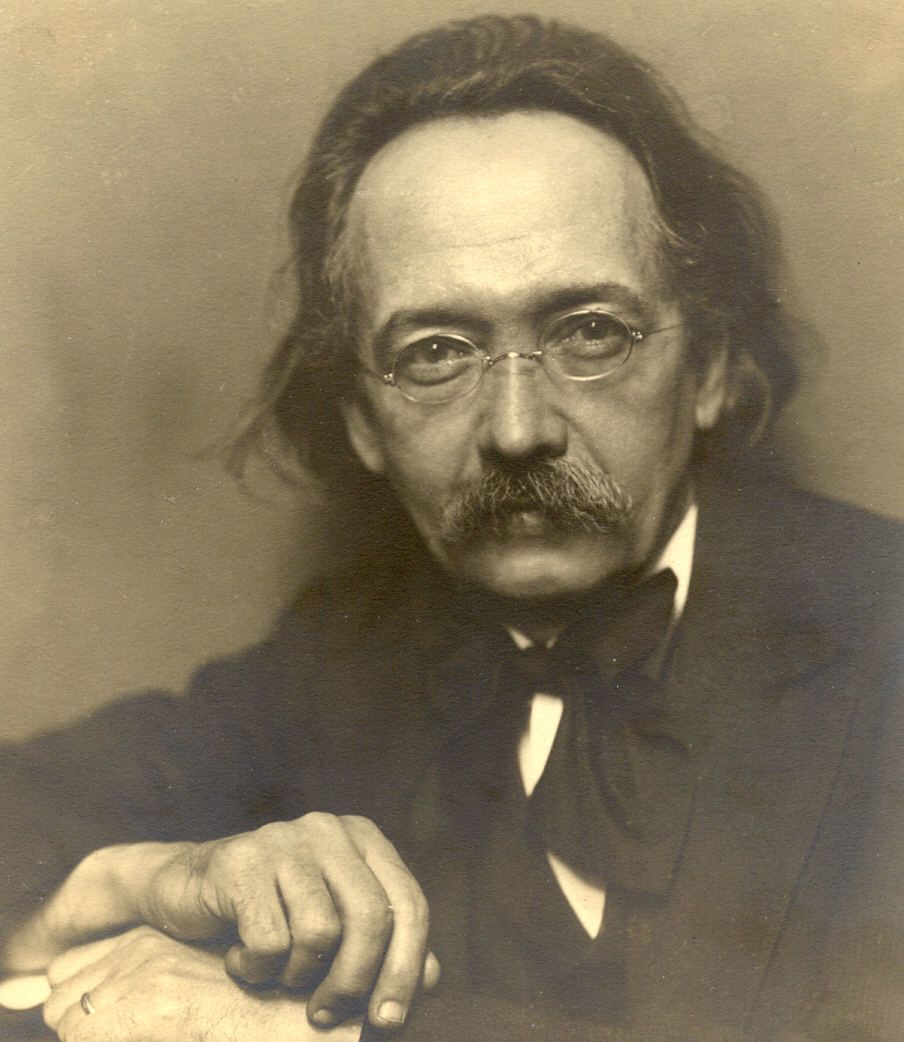
DIRK SCHÄFER (ROTTERDAM, 25 NOVEMBER, 1873 – AMSTERDAM, 16 FEBRUARY, 1931)


Schäfer received piano lessons from J. Sikemeijer in Rotterdam. He then studied at the conservatory in Cologne. He was a famous pianist who also performed outside the Netherlands. He was particularly known for his performances of Frédéric Chopin’s works. He also played many transcriptions of harpsichord works, including the Goldberg Variations of J. S. Bach. For example, in the 1913-1914 season he played a series of 10 concerts on so-called ‘’Historical evenings’’ at the Amsterdam Concertgebouw. As a composer he usually wrote works for orchestra. His music is characterized by rich harmonies with lush coloration and a sonorous sound. Schäfer is not exactly a typical Dutch composer in his composing.


TRACKLIST


WELTE-MIGNON 3956 PARADIES – Toccata, A

WELTE-MIGNON 3957 FAURE – Impromptu No. 3, Op. 34, Ab

WELTE-MIGNON 3962 MOMPOU – Canco I Dansa (Song and Dance)

WELTE-MIGNON 3964 DEBUSSY – L’Isle Joyeuse (The Island of Joy)


DIRK SCHÄFER WELTE-MIGNON PIANO ROLLS CDR

Monday, July 7, 2025

VLADIMIR DE PACHMANN WELTE-MIGNON PIANO ROLLS 2 CDR


VLADIMIR VON PACHMANN OR PACHMAN (ODESSA, UKRAINE 27 JULY 1848 – ROME, ITALY 6 JANUARY 1933)


Vladimir von Pachmann or Pachman was a pianist of Russian-German ethnicity, especially noted for performing the works of Chopin, and also for his eccentric on-stage style. Pachmann was born in Odessa, Ukraine as Vladimir Pachmann. The von or later de as a nobiliary particle was most probably added to his name by himself. Three of his brothers serving as officers in the Imperial Russian Army did not use the particle, as might be expected. His father was a professor at the University of Odessa and a celebrated amateur violinist who had met Beethoven, Weber and other notable composers in Vienna. He was his son's only teacher until he turned 18, at which time he went to Vienna to study music at the Vienna Conservatory, studying piano with Josef Dachs (a pupil of Carl Czerny) and theory with Anton Bruckner. He gained the Conservatory's Gold Medal and made his concert debut in Odessa in 1869, but until 1882 he appeared in public infrequently, spending his time in further study. He then toured throughout Europe and the United States, and was acclaimed as a top player of his era. His programmes consisted almost exclusively of the works of Chopin, with only an occasional movement by Bach, Scarlatti, Mendelssohn or Henselt. In Denmark he was appointed a Knight of the Order of the Dannebrog. Pachmann was one of the earliest to make recordings of his work, beginning in 1906 with recordings for the Welte-Mignon reproducing piano and in 1907 for the gramophone. He was also famous for gestures, muttering, and addressing the audience during his performance. In April 1884 Pachmann married the Australian-born British pianist Maggie Okey (Annie Louisa Margaret Okey, 1865–1952), who was later known as Marguérite de Pachmann. They did concert tours of Europe together and had three sons – Victor, who died in infancy, Adriano and Leonide (called Lionel). The marriage ended after seven years. Vladimir de Pachmann died in Rome in 1933, aged 84.


TRACKLIST


1. Ballade In A Flat Major (Chopin) Welte-Mignon 7227

2. Impromptu In Flat Major Op. 36 (Chopin) Welte-Mignon 7204

3. 4. 5. Italian Concerto In F Major (Bach) 1st 2nd 3rd Movements Welte-Mignon 7244, 7245, 7246

6. Mazurka In A Flat Major Op. 50 No. 2 (Chopin) Welte-Mignon 7206

7. Mazurka in A Minor Op. 67 No. 4 (Chopin) Welte-Mignon 1222

8. Mazurka In C Major Op. 56 No. 2 (Chopin) Welte-Mignon 1221

9. Minute Waltz In D Flat Major Op. 64 No. 1 (Chopin) Welte-Mignon 1220

10. Moment Musical In F Minor Op. 94 No. 3 (Schubert) Welte-Mignon 1211

11. Nocturne In B Minor Op. 32 No. 1 (Chopin) Welte-Mignon 7263

12. Nocturne in C Sharp Minor Op. 27 No. 1 (Chopin) Welte-Mignon 7202

13. Prelude In F Major Op. 28 No. 23 (Chopin) Welte-Mignon 1214

14. Rigoletto Paraphrase (Verdi - Liszt) Welte-Mignon 7201

15. Rondo A La Turk K.331 (Mozart) Welte-Mignon 1206

16. Songs Without Words No. 25 In G Major Op. 62 No. 1 (Mendelssohn) Welte-Mignon 1209

17. Waltz In C Sharp Minor Op. 64 No. 2 (Chopin) Welte-Mignon 7209

18. Waltz In F Major Op. 34 No. 3 (Chopin) Welte-Mignon 7228


VLADIMIR DE PACHMANN WELTE-MIGNON PIANO ROLLS 2 CDR

WANDA LANDOWSKA WELTE-MIGNON AND DUO-ART PIANO ROLLS CDR


WANDA LOUISE LANDOWSKA (JULY 5, 1879, WARSAW, POL., RUSSIAN EMPIRE — AUG. 16, 1959, LAKEVILLE, CONN., U.S.)


Polish-born harpsichordist who helped initiate the revival of the harpsichord in the 20th century. Landowska studied composition in Berlin in 1896, and in 1900 she went to Paris. There, influenced by her husband, Henry Lew, an authority on folklore, she researched early music and keyboard instruments. She taught at the Schola Cantorum (established 1894), first played the harpsichord in public in 1903, and in 1909 published, with her husband, Musique ancienne, a study of 17th- and 18th-century music. She remained until the beginning of World War II the principal exponent of 17th- and 18th-century harpsichord music, particularly that of Johann Sebastian Bach and François Couperin, on whose works she wrote several studies. In 1925 she founded a school for the study of early music at Saint-Leu-La-Forêt, near Paris, and in 1941 settled in the United States. Among the modern works she inspired were the harpsichord concerti of Manuel de Falla and Francis Poulenc. Her collected writings may be found in Landowska on Music (1965; edited by Denise Restout).


TRACKLIST


1. 962 WELTE-MIGNON SCHUBERT-LANDOWSKA - Walzerkette (Chain of Waltzes)

2. 963 WELTE-MIGNON CHOPIN - Waltz, Op. 64, No. 1, Db “Minute”

3. 964 WELTE-MIGNON CHOPIN - Waltz, Op. 69, No. 2, b

4. 965 WELTE-MIGNON BERLIOZ-LANDOWSKA - Danse des sylphs fr “La Damnation de Faust”


WANDA LANDOWSKA WELTE-MIGNON AND DUO-ART PIANO ROLLS CDR

Sunday, July 6, 2025

OLGA SAMAROFF WELTE-MIGNON PIANO ROLLS CDR


OLGA SAMAROFF (SAN ANTONIO, TEXAS, AUGUST 8, 1880 – NEW YORK, MAY 17, 1948)


Samaroff was born Lucy Mary Olga Agnes Hickenlooper in San Antonio, Texas, and grew up in Galveston, where her family owned a business later wiped out in the 1900 Galveston hurricane. After her talent for the piano was discovered, she was sent to Europe to study, since at that time there were no great piano teachers in the United States. She first studied with Antoine François Marmontel and Alkan's son, Élie-Miriam Delaborde at the Conservatoire de Paris and later with Ernst Jedliczka in Berlin. While in Berlin, she was very briefly married to Russian engineer Boris Loutzky. After her divorce from Loutzky and the disaster which claimed her family's business, she returned to the United States and tried to carve out a career as a pianist. However, she soon discovered she was hampered both by her awkward name and her American origins. Her agent suggested a professional name change, which was taken from a remote relative. As Olga Samaroff, she self-produced her New York debut at Carnegie Hall in 1905 (the first woman ever to do so). She hired the hall, the orchestra, and conductor Walter Damrosch, and made an overwhelming impression with her performance of Tchaikovsky's Piano Concerto No. 1. She played extensively in the United States and Europe thereafter. Samaroff discovered Leopold Stokowski (1882–1977) when he was church organist at St. Bartholemew's in New York and later conductor of the Cincinnati Symphony Orchestra. She played Tchaikovsky's Piano Concerto No. 1 under Stokowski's direction when he made his official conducting debut in Paris with the Colonne Orchestra on May 12, 1909. She married Stokowski in 1911, and their daughter Sonya was born in 1921. At that time, Samaroff was much more famous than her husband and was able to lobby her contacts to get Stokowski appointed in 1912 to the vacant conductor's post at the Philadelphia Orchestra, launching his international career. Samaroff made a number of recordings in the early 1920s for the Victor Talking Machine Company. Samaroff was the second pianist in history, after Hans von Bülow, to perform all 32 Beethoven piano sonatas in public, preceding Artur Schnabel (who did the series first in 1927) by several years. German pianist Walter Gieseking would also perform the complete sonatas in public by age fifteen (circa 1910). In 1923, Samaroff and Stokowski divorced; the reasons included Stokowski's infidelity, from which she never recovered. She took refuge in her friends, among whom were George Gershwin, Irving Berlin, Dorothy Parker, and Cary Grant. In 1925, Samaroff fell in her New York apartment and suffered an injury to her shoulder. The injury forced her to retire from performing. So from that point on, she worked primarily as a critic and teacher. She also wrote for the New York Evening Post until 1928, and she gave guest lectures throughout the 1930s. Samaroff developed a course of music study for laymen and was the first music teacher to be broadcast on NBC television. She taught at the Philadelphia Conservatory and in 1924, was invited to join the faculty of the newly formed Juilliard School in New York. She taught at both schools for the rest of her life. Called "Madam" by her students, she was an advocate for them. She supplied many of her Depression-era charges with concert clothes and food. She also pressed officials at Juilliard to build a dormitory – a project that was not realized until after her death decades later. Her most famous pupil was concert pianist William Kapell, who was killed in a 1953 plane crash at age 31. She herself said that the best pianist she ever taught was the New Zealander Richard Farrell, who also died at age 31, in a motor vehicle accident in England in 1958. Samaroff published an autobiography, An American Musician's Story, in 1939. She died of a heart attack at her home in New York on the evening of May 17, 1948, after giving several lessons that day. Samaroff is related to Civil War general Andrew Hickenlooper and to Colorado Governor John Hickenlooper. In Hickenlooper's 2016 memoir, he states that the name change from Hickenlooper to Samaroff was suggested by Samaroff's cousin and Federal Judge Smith Hickenlooper.


TRACKLIST


Olga Samaroff made 10 Welte-Mignon piano rolls

1. 1472 WELTE-MIGNON CHOPIN- Piano Sonata No. 3, Op. 58, b  1st & 2nd mvts.

2. 1473 WELTE-MIGNON CHOPIN- Piano Sonata No. 3, Op. 58, b  3rd & 4th mvts.

3. 1474 WELTE-MIGNON WAGNER-LISZT - March from the Opera “Tannhäuser”

4. 1476 WELTE-MIGNON BRAHMS - Rhapsody, Op. 79, No. 2,  g

5. 1478 WELTE-MIGNON GRIEG - Piano Concerto, Op. 16, a   1st mvt.

6. 1479 WELTE-MIGNON GRIEG -”Peer Gynt” Op. 46, Nos. 1 Morning Mood; 2 Aase’s Death

7. 1480 WELTE-MIGNON GRIEG - “Peer Gynt”,Op. 46, Nos. 3 Anitra’s Dance; 4 In the Hall  Mountain King

8. 1481 WELTE-MIGNON FAURE - Impromptu No. 2, Op. 31, f


OLGA SAMAROFF WELTE-MIGNON PIANO ROLLS CDR

THEODOR LESCHETIZKY THE COMPLETE WELTE-MIGNON PIANO ROLLS CDR


THEODOR LESCHETIZKY, ORIGINAL NAME TEODOR LESZETYCKI (JUNE 22, 1830, ŁAŃCUT, POLAND, AUSTRIAN EMPIRE [NOW IN POLAND] — NOVEMBER 14, 1915, DRESDEN, GERMANY)


Polish pianist and teacher who, with Franz Liszt, was the most influential teacher of piano of his time. Leschetizky studied under Carl Czerny in Vienna and thus was linked indirectly with the playing of Czerny’s teacher, Ludwig van Beethoven. In 1852 he went to St. Petersburg as a pianist and teacher. From 1878 he taught in Vienna. As one of the great pianists of the Romantic era, he approached the printed note with a certain amount of freedom. As a teacher, he stressed thorough understanding of the music, absolutely sound technique, and, above all, beauty of tone. Although the celebrated “Leschetizky method” of teaching was much discussed, he himself claimed to have no fixed method, and his students affirmed that he developed the individual characteristics of each student. His pupils included many of the leading pianists of the 19th and early 20th centuries, among them Artur Schnabel, Ossip Gabrilowitsch, and Ignacy Paderewski.


TRACKLIST


1. 1192 WELTE-MIGNON MOZART - Fantasia, K. 396, c

2. 1193 WELTE-MIGNON HELLER - Preludes, Op. 81, No. 3, G; No. 10, c#

3. 1194 WELTE-MIGNON CHOPIN - Nocturne, Op. 27, No. 2, Db

4. 1195 WELTE-MIGNON CHOPIN - Polonaise, Op. 71, No. 2, Bb (Posthumous)

5. 1196 WELTE-MIGNON LESCHETIZKY - Barcarolle, Op. 39, No. 1, a

6. 1197 WELTE-MIGNON LESCHETIZKY - La source (The Spring) Etude, Op. 36, No. 4, A

7. 1198 WELTE-MIGNON LESCHETIZKY - Arabesque, en forme d’étude, Op. 45, No. 1, Ab

8. 1199 WELTE-MIGNON LESCHETIZKY - L’Aveu (The Secret) Op. 31, No. 1, Ab

9. 1200 WELTE-MIGNON LESCHETIZKY - Wellen und Wogen (Waves and Billows) Op. 40, #1,e

10. 1201 WELTE-MIGNON LESCHETIZKY - Mazurka, Op. 24, No. 2, Eb

11. 1202 WELTE-MIGNON LESCHETIZKY - Canzonetta Toscana, Op. 39, No. 3, f

12. 1203 WELTE-MIGNON LESCHETIZKY - Les deux alouettes (Two Larks) Op. 2, No. 1, Ab


THEODOR LESCHETIZKY THE COMPLETE WELTE-MIGNON PIANO ROLLS CDR

JOSEF PEMBAUR WELTE-MIGNON PIANO ROLLS CDR


JOSEF PEMBAUR (INNSBRUCK, 20 APRIL, 1875 – MUNICH, 12 OCTOBER, 1950)


Born in Innsbruck, Pembaur was the son of the composer and music director Josef Pembaur the Elder (1848–1923). He got his first musical education by his father. From 1893 until 1896, he studied piano at the Hochschule für Musik und Theater München with Ludwig Thuille, conducting with Ludwig Abel and composition and organ with Josef Gabriel Rheinberger. He was awarded a gold medal at the final examination in 1896. From 1896 to 1901, he worked as a piano teacher at the same school. In 1901/02, he continued his studies with Alfred Reisenauer at the University of Music and Theatre Leipzig, where he was employed as a teacher for higher piano playing. In 1912, he was appointed professor of music in Saxony. In 1921, he was appointed professor in Bavaria, but he returned to the Academy of Music in Munich and taught a master class for piano. His students included Anna Renfer. Pembaur also completed numerous concert tours. In Berlin he was one of the judges in the competition for the Ibach Prize. In Spring 1919, Pembaur took eight piano pieces for the Reproduktionsklavier Welte-Mignon, including two compositions by his father, probably his earliest recordings. On 29 October 1918, Thomas Mann heard him in an event with Joachim von Delbrück, who was reading from his novel Der sterbende Chopin that evening. In 1906, he married the pianist Maria Elterich, and the two of them also performed together on two pianos. Pembaur's brother Karl was a composer and choirmaster in Dresden. Pembaur died in Munich at the age of 75.


TRACKLIST


1. 3264 WELTE-MIGNON BRAHMS - Ballade, Op. 10, No. 1, d

2. 3265 WELTE-MIGNON BRAHMS - Ballade, Op. 10, No. 2, D

3. 3266 WELTE-MIGNON BRAHMS - Ballade, Op. 10, No. 3, b

4. 3267 WELTE-MIGNON BRAHMS - Ballade, Op. 10, No. 4, B


JOSEF PEMBAUR WELTE-MIGNON PIANO ROLLS CDR

Saturday, July 5, 2025

HUBERT FLOHR WELTE-MIGNON PIANO ROLLS CDR


HUBERT FLOHR (KOBLENZ, JULY 8, 1869 - DÜSSELDORF, JULY 13, 1940)


Flohr, whose musical talent was already evident in his early childhood, received his first lessons from his father, the high school music teacher Joseph Flohr. Lessons continued in Bonn with Johann Walbrül, a Spohr student who had settled in Bonn. Already at the age of 9 Flohr appeared as a pianist under Julius Langenbach on December 30, 1878 in Bonn's Beethoven Hall with Mozart's Piano Concerto in D minor K. 466. The child prodigy had such a success with this concert that just a month later he performed Beethoven's Piano Concerto in C major again in the Beethoven Hall under Langenbach, further concerts in the Rhineland followed. Also in 1879 the first concert tour to Belgium and the Netherlands was undertaken. At one concert, Liszt's pupil Juliusz Zarębski heard Flohr playing and offered Flohr his place in his artistic class at the Royal Conservatory in Brussels. After Zarębski's death in 1885, Hubert Flohr continued his studies at the Royal Conservatory in Liège with Étienne Ledent and at the Cologne Conservatory with Isidor Seiß. The last training took place with Clara Schumann in Frankfurt. Already an orphan at the age of 16, Flohr then moved to Munich, from where he undertook numerous concert tours through Germany, Switzerland and Austria-Hungary. As a song accompanist he performed with Pauline Lucca, Amalie Joachim, the violinist August Wilhelmj and the cellist Joseph Diem. In 1892 Flohr settled in Neuss, in 1902 he went to Düsseldorf, where he worked as a teacher at the Buths-Neizel Conservatory and as the municipal music director for over 25 years, and also became a member of the Malkasten artists' association. He died of lung cancer in 1940. His 50th anniversary as an artist in 1928 was celebrated with a festive event in Düsseldorf. In 1959 his 90th and in 1969 his 100th birthday were commemorated in Düsseldorf. Flohr's compositions were destroyed by an air mine in 1942.


TRACKLIST


1. 3348 WELTE-MIGNON BRAHMS - Scherzo, Op. 4, eb

2. 3351 WELTE-MIGNON MENDELSSOHN - Overture to “A Midsummer Night’s Dream” Op. 17

3. 3352 WELTE-MIGNON WEBER - Overture to the Opera “Preciosa”

4. 3356 WELTE-MIGNON SIBELIUS -”Finlandia”, Op. 26, No. 7

5. 3357 WELTE-MIGNON RAFF - Cachoucha, Caprice, Op. 79, c

6. 3359 WELTE-MIGNON FLOHR - Lenz, Lied Op. 19, 5


HUBERT FLOHR WELTE-MIGNON PIANO ROLLS CDR